History of Pathabhavan Dankuni
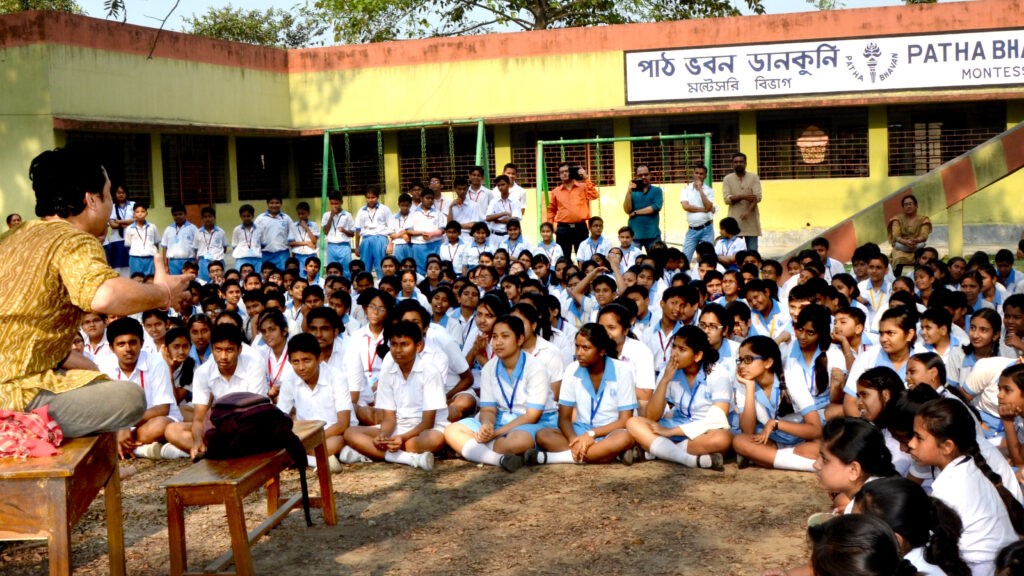
The name Pathabhavan evokes different images for Bengali-speaking people—some even recall the spirit of Tagore’s Shantiniketan. But in Kolkata and its neighbouring districts, Pathabhavan represents a progressive vision of education. At a time when the traditional, exam-driven British-era system continued unchanged, a group of dedicated teachers came together to introduce a fresh educational approach. Their commitment marked the beginning of a new chapter in Bengal’s education landscape.
Despite challenges and difficult phases, Pathabhavan continued to grow steadily. Much of its strength came from the inspiring guidance of Smt. Uma Sehanbis, whose influence left a deep impact on everyone who worked with her.
The first Governing Body and Managing Committee included eminent intellectuals such as Meera Dutta Gupta, Sushobhan Sarkar, Ajit Dutta, Tarun K. Basu, Satyajit Ray, Dr. Amiya Bose, and others. Their relentless effort shaped Pathabhavan into what it is today. They believed that a child’s mind absorbs the world around them, so students were exposed to enriching experiences—classical dance, music (Indian and Western), Shakespearean plays, special performances by renowned artistes, and week-long Satyajit Ray film festivals. Popular events like Shishu Mela, Sukumar Mela, and Satyajit Mela became joyful learning spaces for children. Even the school logo and the Mela signature tune were created by Satyajit Ray himself.
When the founders approached DCC to start a Bengali-medium primary school in Dankuni, the authorities were hesitant. But due to the persistent efforts of Smt. Sehanbis, the team visited the site, spoke to officials, and eventually accepted the vision. Pathabhavan focused on the holistic development of each child, giving equal importance to art, craft, music, humanities, and sciences. With strong support from parents and the Dankuni Coal Complex authorities, the school expanded rapidly to the secondary and later the higher secondary levels.
The name Pathabhavan evokes different images for Bengali-speaking people—some even recall the spirit of Tagore's Shantiniketan. But in Kolkata and its neighbouring districts, Pathabhavan represents a progressive vision of education. At a time when the traditional, exam-driven British-era system continued unchanged, a group of dedicated teachers came together to introduce a fresh educational approach. Their commitment marked the beginning of a new chapter in Bengal's education landscape.